


The Affiliate Marketing Tools That Actually Matter in 2026
On this page
You don’t need every tool on this page. You need the right one for the job in front of you, at the stage you’re at. The stakes are real: every untracked conversion is a commission you earned but can’t prove. This guide organizes the affiliate marketing tools worth paying for in 2026 by the job they do, so you can build a stack that scales with your business instead of draining it.
A good rule before you buy anything: match the tool to the stage. Early on, you need hosting, a page builder, conversion tracking, and keyword research. As you grow, you layer in SEO, email, ad intelligence, and automation. Spending on advanced tooling before you have traffic is overkill; skipping the basics once you do is how you stall.
How to Evaluate an Affiliate Marketing Tool
Run every candidate through four questions:
- Is it affiliate-friendly? Some platforms restrict affiliate links in their terms of service. Check the current ToS before you commit, especially with email providers.
- Does it integrate with your stack? A tool that connects to your other tools, ideally through Zapier or Make, saves hours of manual work.
- Does the pricing scale sanely? Cheap today can get expensive fast. Look at the tier above the one you’d start on.
- Does it fit how you actually run campaigns? A media buyer and an SEO blogger need very different stacks. Buy for your model, not the generic “best” list.
Conversion Tracking and Attribution
This is the tool that separates affiliates who guess from affiliates who scale. Google Analytics 4 is the free baseline for site traffic, but it can’t see the conversions that happen off your site, on an affiliate network’s server, after the click. For that you need a conversion tracking and attribution platform. The gap is measurable: advertisers who served the Google tag from their own domain with Google tag gateway saw an 11% uplift in signals (Google Data, April 2025).
One distinction before you compare: these are attribution trackers for marketers who promote offers. If you run your own affiliate program and need to recruit partners and manage payouts, you want affiliate management software, a different category.
AnyTrack
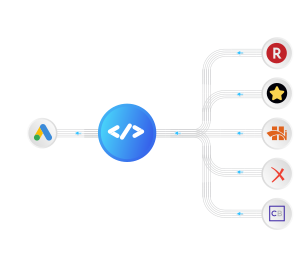
A first-party, redirectless conversion tracking platform for affiliates and advertisers who aren’t developers. You install one Tracking Tag, and AutoTag writes each network’s own tracking parameter into your links automatically (subId1 on Impact, sid on CJ, tid on ClickBank). When an affiliate network triggers a postback, AnyTrack matches it to the original click and syncs it server-side to Google Ads, the Meta Conversion API, TikTok, Microsoft Ads, and GA4, so bidding optimizes on real commissions instead of clicks. Every network you run lands in one Conversions Report, with no dashboard-stitching. It pulls conversions from 90+ affiliate networks, it’s the easiest in this group to set up without code, and there’s a free plan to start. To see it working end to end with Meta traffic, follow the playbook to track affiliate commissions back to your Facebook Ads campaigns, rebills included.
Voluum
A cloud ad tracker for high-volume media buyers, with AI traffic distribution and anti-fraud tooling. It’s campaign-centric and built for scale across many paid traffic sources. Powerful, but heavier than a content affiliate needs, and its Conversion API support sits on higher tiers.
RedTrack
A cookieless, server-side tracker and attribution tool for agencies and performance marketers, with Conversion API support included on entry plans and 200+ integrations. It’s the closest traditional-tracker peer to AnyTrack, with a more campaign- and agency-oriented workflow.
Binom
A self-hosted tracker for advanced affiliates who want raw speed and full data ownership, at the cost of running your own server.
Hyros
A multi-touch attribution platform for high-spend advertisers with complex funnels, built around the customer’s email. Pricing is demo-gated and scales with tracked revenue, and it doesn’t track affiliate networks (its ClickBank integration is vendor-only), so it fits high-ticket funnels better than affiliate campaigns.
If you’re comparing these, the deciding factors usually come down to: redirectless and server-side vs. redirect-based tracking (redirects can get flagged as cloaking by Google and Meta), whether Conversion API delivery is included or paywalled, how many affiliate networks the tool can pull conversions from, whether you can see EPC per offer rather than just clicks, and how much setup it demands if you don’t have a developer.
For the full comparison grouped by use case, including the eCommerce and info-product tools that don’t belong in an affiliate stack, read the best AnyTrack alternatives, compared.
Keyword and SEO Research
Keyword research tells you what your audience is actually searching, which guides both your SEO and your paid campaigns.
- Ahrefs. Best for backlink analysis and reverse-engineering what’s already ranking in your niche.
- Semrush. The broadest all-in-one platform, now with AI visibility tracking that shows where your brand appears in ChatGPT, AI Overviews, and Perplexity.
- LowFruits. A budget pick for finding low-competition keywords, ideal for niche site builders.
Pair these with an on-page SEO tool like Rank Math (a WordPress plugin) to optimize content as you publish.
Web Hosting
Every tool downstream inherits your hosting. A slow site taxes the clicks you paid for, and Google factors speed into rankings, so this is the one boring purchase that touches everything.
- SiteGround. The dependable mainstream pick for WordPress affiliate sites, with plans that scale from your first site to high-traffic cloud hosting.
- WP Engine. Premium managed WordPress hosting for established sites, where speed and expert WordPress support are worth paying for.
Content and Landing Pages
Slow, ugly pages kill conversions. You don’t need to hire a developer to fix that.
- WordPress with Elementor. The default for content and review sites: drag-and-drop building on self-hosted WordPress.
- Unbounce. A conversion-first landing page builder with AI traffic routing and dynamic text replacement, built for paid campaigns.
- ClickFunnels. Full multi-step funnel infrastructure for offer and funnel affiliates.
- Carrd. Ultra-cheap single-page builder for simple bridge or link pages.
Email Marketing and Automation
Email is still the highest-leverage channel for nurturing an audience, but you have to use an affiliate-friendly provider.
- Kit (formerly ConvertKit). Creator-focused email and automation, the standard for bloggers.
- ActiveCampaign. Advanced automation and CRM, with affiliate links permitted (may need configuration).
- GetResponse. Explicitly permissive on affiliate content, with autoresponders and funnels built in.
For automation, Zapier and Make (formerly Integromat) connect your tools through webhooks without code. AnyTrack can send conversions to either through a webhook, so a sale can trigger a CRM update, a Slack alert, or an email sequence automatically.
Ad Intelligence and Competitive Research
If you run paid traffic, competitive intelligence tells you which ads and angles are working right now.
- AdPlexity. The deepest coverage across native, push, mobile, and desktop, with one-click landing page download.
- Anstrex. A large native and push ad database with an AI ad generator, at a lower entry price.
- BigSpy. A broad social creative library across Facebook, TikTok, and YouTube, with a free tier for trend research.
Link Management
As your library of affiliate links grows, you’ll want to brand, organize, and track them in one place. (These plugins redirect on your own domain, which is different from the tracker redirects that carry cloaking risk with ad platforms.)
- Pretty Links. A WordPress plugin for cloaking, shortening, and redirecting links, with a strong free version for beginners.
- ThirstyAffiliates. A WordPress affiliate-link manager with categorization, auto-linking, and geo features.
- Lasso. A premium option for established affiliates, with stronger reporting and geolocation, and importers from the two tools above.
Analytics and Reporting
- GA4. The free, event-based baseline for web analytics, with built-in attribution modeling. For the affiliate-specific setup, see GA4 for affiliate marketing.
- Looker Studio. Free dashboarding on top of GA4 and other sources, so you can build the report you actually want to look at.
Key Takeaways
- Buy for the job and the stage. Hosting, a page builder, conversion tracking, and keyword research come first; advanced tooling comes once you have traffic.
- Conversion tracking is the highest-leverage tool. It’s what lets you optimize on real sales and EPC instead of clicks.
- Check affiliate-friendliness before you commit, especially with email providers, where some terms of service restrict affiliate links.
- Favor tools that integrate. A connected stack (through native integrations, Zapier, or Make) compounds in value as you grow.
Frequently Asked Questions
What tools do I actually need to start affiliate marketing?
At the start, you need reliable hosting, a page builder (WordPress with Elementor is the common default), conversion tracking, free Google Analytics 4, and a keyword research tool. Add email, SEO, and ad intelligence tools as your traffic and revenue grow.
What are the best AnyTrack alternatives?
The main alternatives are RedTrack, Voluum, Binom, and Hyros. RedTrack is the closest peer (cloud, server-side, Conversion API on entry plans), Voluum suits high-volume media buyers, Binom suits technical affiliates who self-host, and Hyros targets high-ticket info products rather than affiliate campaigns. For the full comparison grouped by use case, read the AnyTrack alternatives guide on this blog.
Why isn't Google Analytics enough for affiliate marketing?
GA4 tracks activity on your own site, but most affiliate conversions happen off-site, on the merchant's or network's server, after the click. You need a conversion tracking platform that ingests those postbacks, attributes them to the original click, and feeds the data back to your ad platforms.
Are email marketing tools affiliate-friendly?
It varies, and policies change. Kit, ActiveCampaign, and GetResponse are generally workable for affiliates, but some providers restrict bare affiliate links in their terms of service. Always check the current ToS before building your list on a given platform.
How do automation tools like Zapier help affiliates?
Zapier and Make connect your tools through webhooks without code. Paired with a conversion tracking platform, a new conversion can automatically update your CRM, trigger an email sequence, or send a Slack notification, removing manual steps as you scale.
What parts of affiliate marketing can you automate?
Three big ones: link tagging, conversion syncing, and post-conversion workflows. A conversion tracking platform tags every affiliate link with a click ID automatically, matches network postbacks back to the original click, and syncs conversions to your ad platforms without manual uploads. From there, webhooks into Zapier or Make can update your CRM, alert your team, or start an email sequence on every sale.
Build Your Stack on Accurate Data
Most affiliate marketing tools assume you already know which conversions came from where. You usually don’t, unless your tracking closes the loop. AnyTrack sits at the center of the stack: it collects every conversion, attributes it to the right source, and syncs it back to your ad platforms automatically. The step-by-step tracking playbooks show exactly how to wire it up for your stack, from ClickBank to Shopify to GoHighLevel.

Hi, I’m Ori. I’m the Founder of Wingman, a boutique digital marketing agency. I have experience building profitable sites from scratch and I help companies increase their profits online. When I am not working with clients or on my personal projects, you can find me guest blogging on various publications. Does your business have a wingman?
Related posts

 Laurent Malka
RedTrack vs Voluum for ClickBank Affiliates: The Ad Blocker Problem
 Laurent Malka
Google Ads Affiliate Tracking: Why It Breaks and How to Fix It
 Laurent Malka